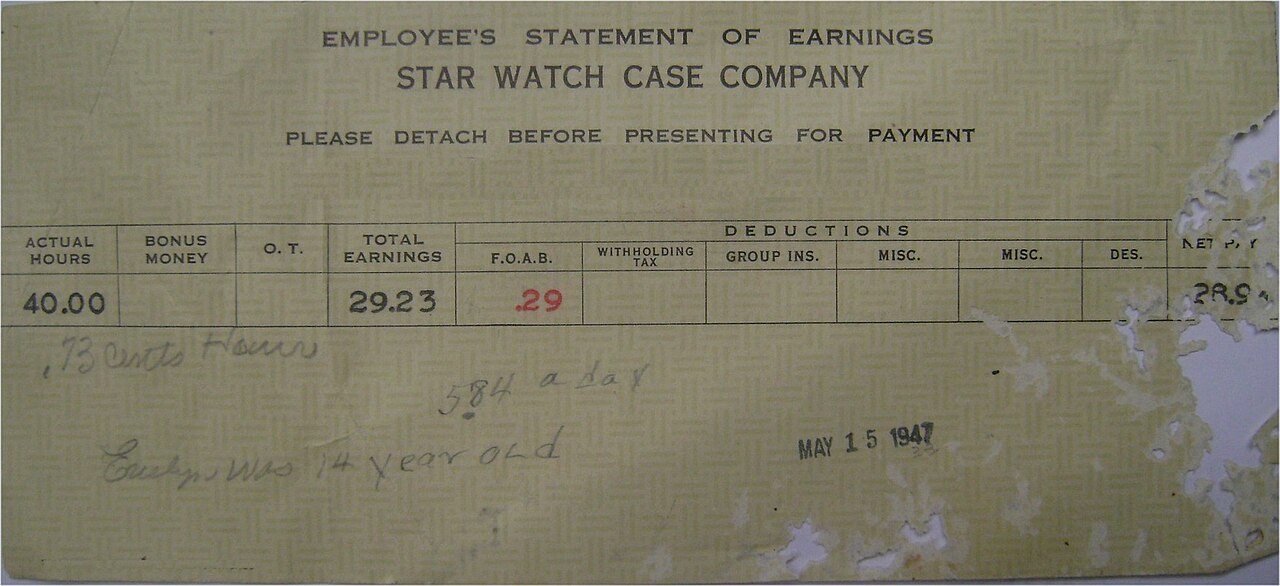
You earn $100,000. Your bank account sees about $72,500. Where did the other $27,000 go? Your pay stub technically tells you — but in acronyms most people never decode. Let’s translate the entire journey from gross to net (Ontario, 2025).
Stop 1: Federal income tax
The biggest bite. Canada uses progressive brackets — for 2025 the lowest rate is a blended 14.5%, then 20.5%, 26%, 29% and 33% on income above ~$253,000. Everyone gets a Basic Personal Amount (~$16,129) that is effectively tax-free. On a $100,000 salary, federal tax runs about $14,700.
Stop 2: Provincial income tax
Your province takes its own cut with its own brackets and basic personal amount — and this is where take-home diverges wildly across the country. In Ontario, provincial tax plus surtax and the Health Premium on $100,000 comes to about $7,200.
Stop 3: CPP / QPP
The Canada Pension Plan (Quebec Pension Plan in Quebec) isn’t really a “tax” — it is forced retirement savings you get back later. For 2025 the maximum employee contribution is about $4,430 once you include the newer “CPP2” tier. It maxes out around $81,200 of income.
Stop 4: Employment Insurance (EI)
EI funds parental leave, job-loss and sickness benefits. For 2025 the maximum employee premium is about $1,077 (lower in Quebec, which runs its own parental plan, QPIP). It caps at $65,700 of insurable earnings.
Putting it together ($100,000, Ontario, 2025)
| Deduction | Approx. amount |
|---|---|
| Federal income tax | $14,719 |
| Ontario tax (incl. surtax + Health Premium) | $7,214 |
| CPP (incl. CPP2) | $4,430 |
| EI | $1,077 |
| Total deductions | $27,440 |
| Take-home pay | $72,560 |
See every deduction for your exact salary and province with our take-home calculator, or browse a common amount at salary after tax by province.